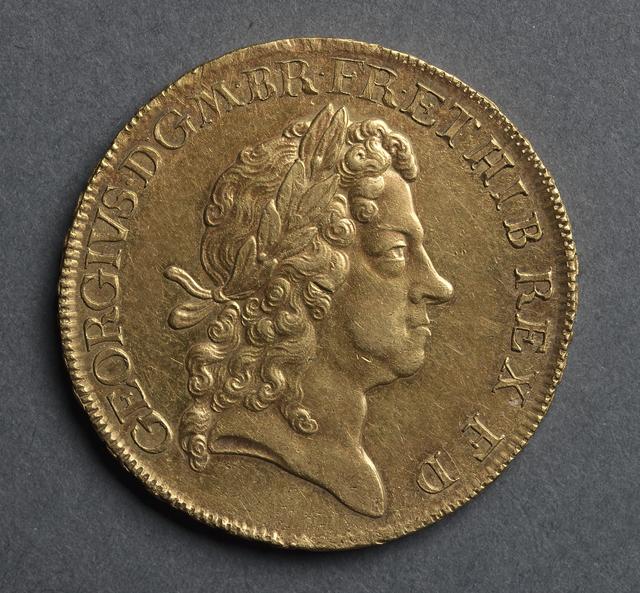
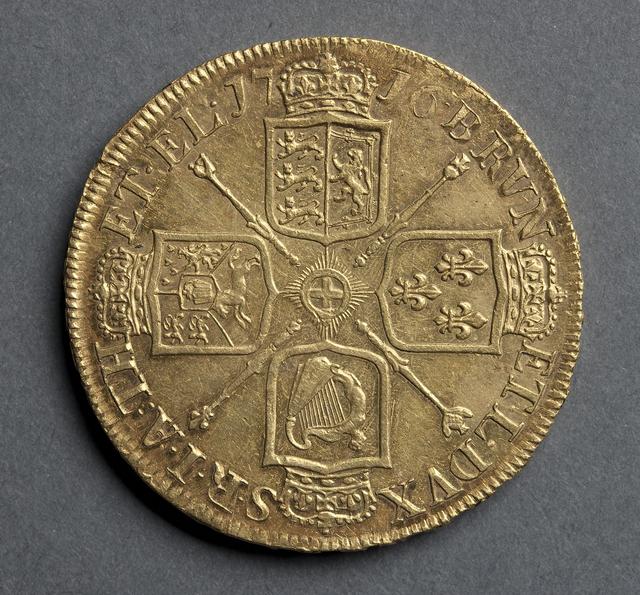
World Coins / EnglandGeorge IGold five guineas1716–1726 CE
George I Gold Five Guineas (1716–1726)
Struck intermittently between 1716 and 1726 at the Tower Mint, the gold five-guinea piece of George I represents the highest circulating denomination of the early Hanoverian monarchy. The issue introduced Hanoverian electoral armorials into the British royal arms, established the title Fidei Defensor on standard circulating milled coinage, and transitioned from a floating commercial tariff to a statutory valuation of twenty-one shillings per guinea following Sir Isaac Newton's 1717 currency reforms.