
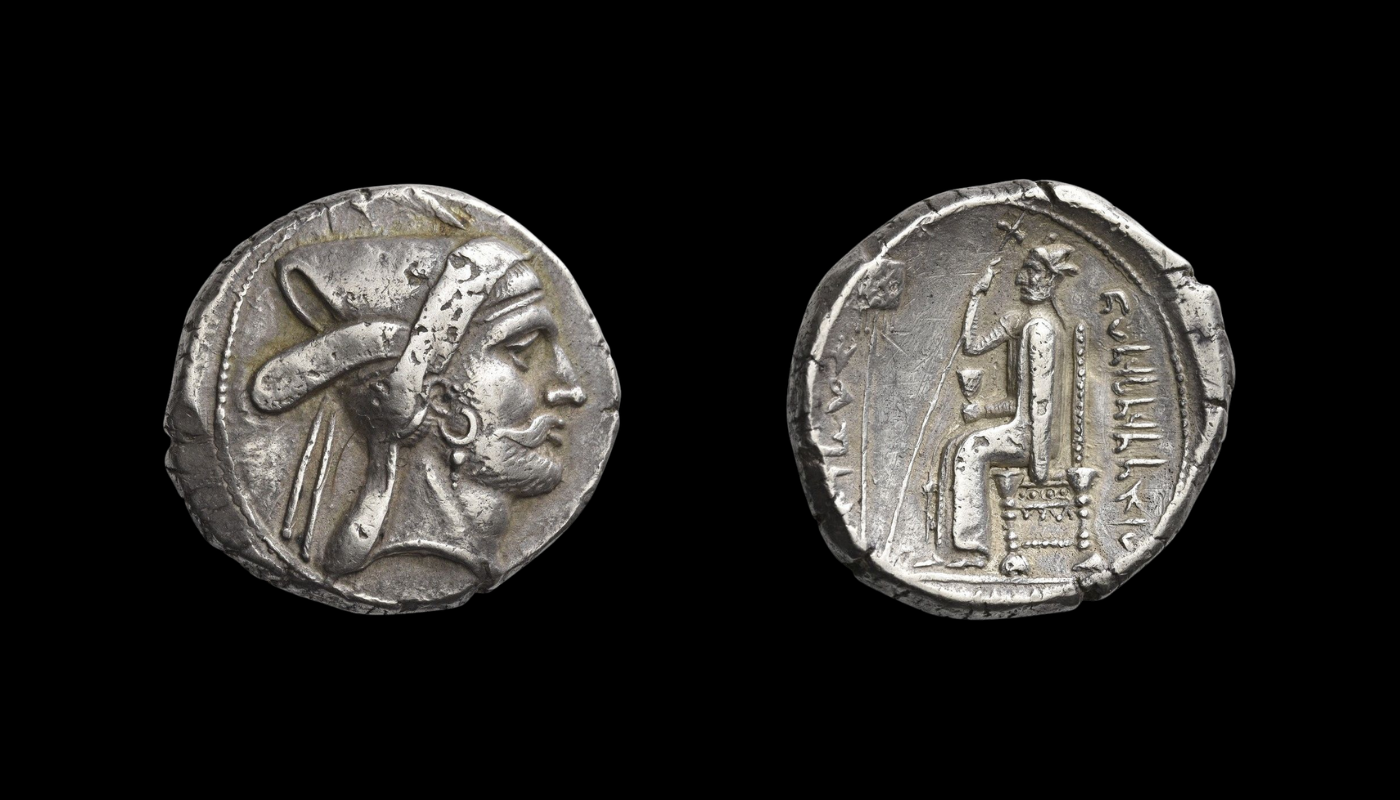
Baydād, also written Bagadates or Bagadad, is treated in van’t Haaff as the first ruler of Persis to issue coins.
He belongs to the Frataraka dynasty of the early Persis coinage sequence, beginning in the early 3rd century BC. His coins are important because they introduce the main visual language of early Persis coinage: local dynastic authority, Aramaic legends, Achaemenid-style headgear, royal standards, and temple imagery.
Historical Context
Baydād was not called “King” on his coins. His legend identifies him as Frataraka, a title usually understood as a local governor, leader, or dynast.
This is important because early Persis rulers appear to have expressed authority through local tradition while still operating within the broader political world shaped by Seleucid power.
Van’t Haaff follows the view that Persis coinage began around 280 BC, soon after Seleucid direct control weakened.
The earliest Persis coins used Hellenistic denominations and weight standards, but their imagery looked back to Achaemenid royal and religious symbols rather than copying Seleucid royal portraits.
Baydād’s coinage appears in two main phases. Van’t Haaff states that Types 511 to 513 belong to Baydād’s first reign, while Types 515 to 517 belong to a second reign.
This division is connected to the complex relationship between Baydād and Ardaxšīr I. Current attribution remains uncertain in the published literature, especially for the political meaning of the overstruck Type 515/519.
Key Coin Features
- Ruler: Baydād, also Bagadates or Bagadad
- Historical position: First Frataraka ruler in the Persis coinage sequence
- Approximate period: Early 3rd century BC
- Denominations: Tetradrachm, drachm, hemi-drachm, and obol
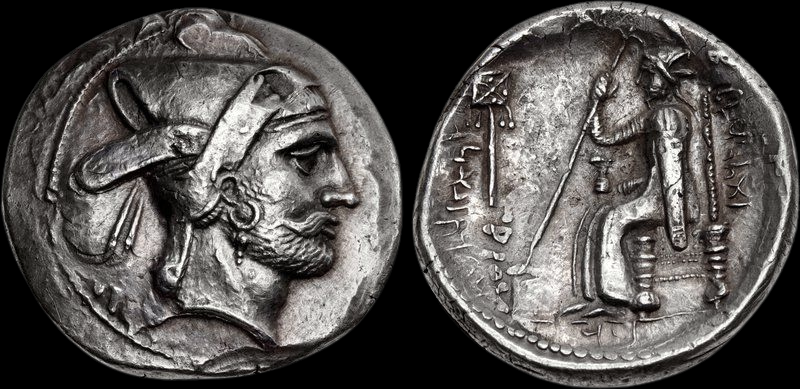
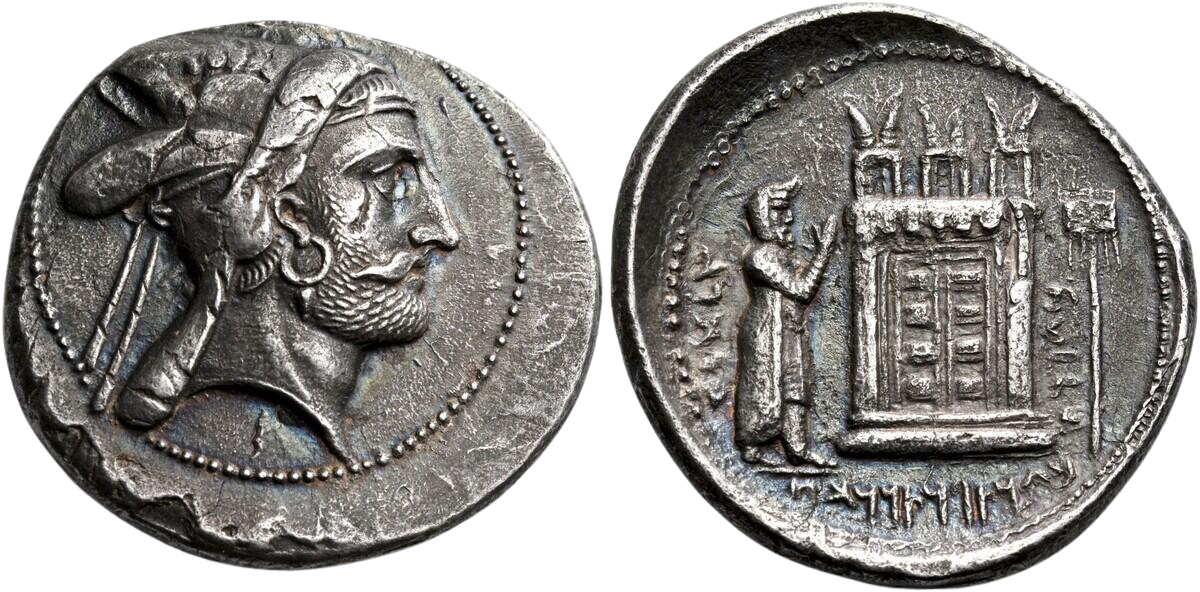
- Obverse: Head of Baydād wearing a traditional kyrbasia-style headdress, with diadem, earring, short beard, and moustache
- Reverse, first type: Baydād seated on a throne, holding a lily sceptre and lotus flower
- Reverse, second type: Fire temple with Baydād standing in adoration, with a standard in the field
- Legend: Aramaic legend naming Baydād as Frataraka of the Gods, son of Bagakart or Bagawart
- Mint: Most probably Persepolis, based on the iconographic and cultural setting described by van’t Haaff
- Fabric: Silver coinage, often overstruck on earlier coinage or other Frataraka issues
© Classical Numismatic Group, Inc.
How to Identify Baydād’s Coins
-
Look for the early Frataraka headgear.
Baydād’s obverse usually shows a kyrbasia-style headdress with upturned cheek covers. This differs from the later protruding-visor type used by Ardaxšīr I and Vahbarz.
-
Check the reverse type.
Baydād’s first issue shows the ruler seated on a throne. His second issue shows a fire temple with the ruler in adoration and a standard in the field.
-
Read the Aramaic legend when visible.
The legend is often incomplete or difficult, but the name bgdt supports attribution to Baydād. Van’t Haaff gives the legend as Bgdt / prtrk’zy / ’lhy’ / br [bgwrt], meaning Baydād, Frataraka of the Gods, son of Bagawart.
-
Compare the denomination and fabric.
Baydād issued tetradrachms, drachms, hemi-drachms, and obols. Many examples are overstruck, which is common in early Frataraka coinage.
-
Use van’t Haaff plates for confirmation.
Do not rely only on the general appearance. Early Frataraka types are visually close, and legends may be garbled, off flan, or partly unreadable.
© The New York Sale
Example Types
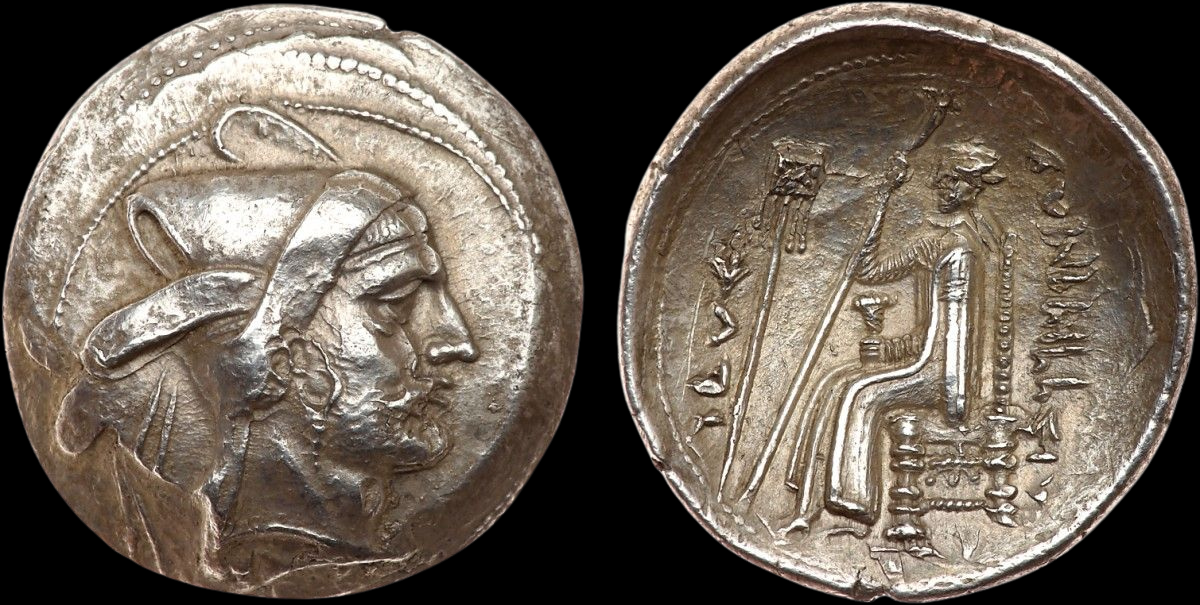
Example 1: van’t Haaff 511/514, Tetradrachm with Ruler on Throne
This is Baydād’s first major type. The obverse shows Baydād wearing the traditional headdress.
The reverse shows him seated on a throne, holding a lily sceptre and lotus flower. Van’t Haaff suggests that this first type may have served as an installation or coronation issue.
This type is important because it presents Baydād as a local dynast using Achaemenid-style royal imagery.
The throne scene connects the ruler visually to earlier royal traditions rather than to Seleucid portrait coinage.
© Classical Numismatic Group, Inc.
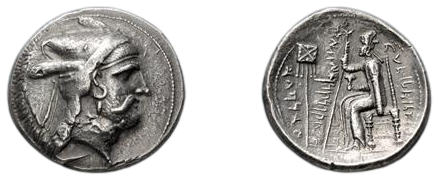
Example 2: van’t Haaff 515/519, Tetradrachm with Fire Temple
This second major type keeps a similar obverse but changes the reverse to a fire temple.
Baydād stands in adoration in the left field, while a standard appears in the right field. This type became highly important for later Frataraka imagery because the ruler before a sacred structure became one of the defining visual formulas of early Persis coinage.
One example, Type 515/519g, is overstruck on another Frataraka coin with a protruding visor.
Klose and Müseler interpreted the undertype as Ardaxšīr I, creating a chronological problem in which Baydād and Ardaxšīr I may have been rivals or near-contemporary figures. Current attribution remains uncertain in the published literature.
© Nomos
Example 3: van’t Haaff 513A, Obol with Standard Only
Type 513A has a reverse with the standard only.
Van’t Haaff notes that this type may belong to either Baydād’s first or second series. The type is useful because it shows the importance of the standard as a symbol of rulership and authority.
Common Misidentifications
Baydād vs. Ardaxšīr I
Baydād and Ardaxšīr I can be confused because both belong to the early Frataraka series and both use local Persis imagery.
The most useful difference is the headgear. Baydād’s first type has a kyrbasia with upturned cheek covers, while Ardaxšīr I uses a satrapal-style helmet with side flaps covering the chin and mouth and a protruding visor.
The reverse can also help. Baydād’s first issue has the seated ruler on the reverse, while Ardaxšīr I is associated with the fire temple reverse.
Baydād’s second series also uses the fire temple, so the legend and headgear become essential.
Baydād vs. Vahbarz
Vahbarz uses a coinage style close to Ardaxšīr I, not Baydād’s first throne type.
His name is shorter in the reverse legend, and his types may include the word prs in the field. If the legend is unclear, compare the headgear and reverse field arrangement carefully.
Baydād vs. Vādfradād I
Vādfradād I continues the Frataraka tradition but introduces major additions, especially the Farnah or winged divine glory above the fire temple and sometimes a bow before the praying ruler.
Baydād’s fire temple type is simpler and does not use the full Vādfradād I reverse formula.
Baydād vs. Seleucid Undertypes
Many early Persis coins were overstruck. A visible trace of an earlier coin does not by itself identify the Persis ruler.
Baydād Types 511/514 and 515/519 include overstruck examples, so attribution must be based on the Persis obverse, reverse, and legend, not only the undertype.
Research Tips
For accurate identification, begin with van’t Haaff’s catalog numbers, especially Types 511/514, 512, 513, 513A, 515/519, 516, 517, and 517A.
Compare the coin against the plates rather than relying only on a written description.
Pay close attention to:
- The form of the kyrbasia
- The presence or absence of the seated ruler
- The fire temple layout
- The standard or labarum
- The position and readability of the Aramaic legend
- Signs of overstriking
- Whether the coin belongs to the throne series or fire temple series
Baydād’s coinage is also useful for studying early Persis identity, because it combines local dynastic titles, Achaemenid-style imagery, and Hellenistic coin denominations.
References
- P. A. van’t Haaff, Catalogue of Persis Coinage, Baydād section, Types 511 to 517A.
- George Francis Hill, Catalogue of the Greek Coins of Arabia, Mesopotamia and Persia, British Museum, 1922.
- Michael Alram, Iranisches Personennamenbuch, Nomina Propria Iranica in Nummis.
- Dietrich O. Klose and Wilhelm Müseler, Statthalter, Rebellen, Könige.
- British Museum collection records for Persis coinage.
- ANS collection records for Persis coinage.
- ACSearch archived examples for comparative attribution.
- CNG published examples and sale records for early Frataraka coinage.
Conclusion
Baydād stands at the beginning of Persis coinage as the first Frataraka ruler recorded by van’t Haaff.
His coins establish the early visual language of Persis: local authority, Aramaic legend, royal headgear, temple imagery, and continuity with older Persis traditions.